







Search Results for: ordering kiosks

Supermodel Robot Café Coming Soon to Dubai: Will Fully Automated Unmanned Service Replace Baristas?
What happens when barista craftsmanship meets supermodel robots? According to British media reports, the world's first supermodel robot café, Donna Cyber Café, is planned to open in Dubai in 2023. The robot waitstaff are modeled after Eastern European model Diana Gabdullina, featuring silicone skin and lifelike eyes, and can even recognize customers' emotions. The store will operate 24 hours a day, with everything from making coffee to serving ice cream done entirely by robotic arms. Meanwhile, domestically, unmanned coffee kiosks represented by COFE+ are also expanding rapidly and have already been exported to multiple countries. Will robots steal baristas' jobs, or drive the industry's upgrading? This article takes you to find out. [more…]
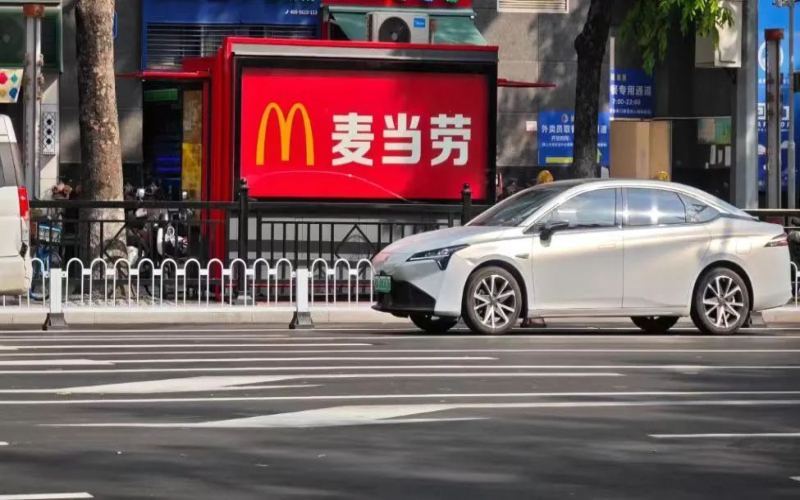
McDonald's Opens Its First Newsstand Window Store in Guangzhou: Where Coffee Breakfast and Urban Memories Spark New Chemistry
Once ubiquitous on street corners, newspaper kiosks are gradually fading from the urban landscape—some have shut down, while others have found new life through transformation. Recently, McDonald's in Guangzhou converted a newspaper kiosk into a window-service outlet, selling coffee, breakfast, and ice cream, drawing considerable attention. This is not the first time a chain brand has experimented with kiosk conversions—KFC launched its KCOFFEE newspaper kiosk as early as last year. From luxury brands to China Post, the humble newspaper kiosk is being given an entirely new commercial role. Can this "newsstand + food and beverage" model sustain itself long-term, and can it revive people's urban memories? Let's take a look at the stories behind this wave of kiosk transformations. [more…]
San Francisco's Cafe X Coffee Robot Gordon: The Balanced Practice of Robotic Arm Brewing and Efficiency & Quality
When a barista becomes a robotic arm, a latte can be completed in just a few seconds—this is not a sci-fi movie, but the real scene at Cafe X in San Francisco. This small kiosk, founded by Hong Kong-born young man Henry Hu, centers on a modified Mitsubishi robotic arm named Gordon, attempting to find a balance between efficiency and quality. Cafe X does not pursue fancy customization, but returns to the essence of minimalist coffee, collaborating with roasters such as Verve and Peet's to allow the robot to precisely execute brewing parameters. The store also has product specialists offering tastings and explanations, similar to the role of a sommelier or an Apple Genius. Can this model change the development predicament of fast-food technology in Silicon Valley? How will the future of human-machine collaboration affect the coffee service industry? [more…]
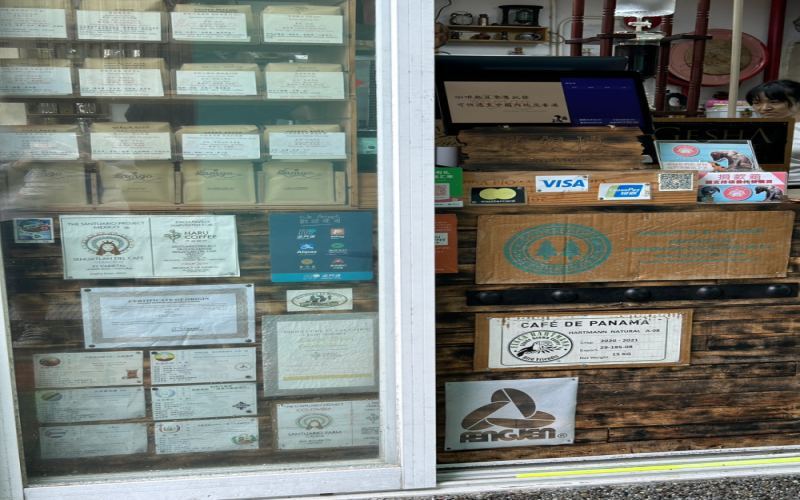
Small Shops Can Also Build Big Businesses: Community Café Operation Strategies and New Marketing Ideas for 2023
A mere 20-square-meter coffee shop in Macau, with its consistent quality and unspoken rapport with regulars, leaves a lasting impression; a 1-square-meter mini café in Japan, converted from a cigarette kiosk, has also become a neighborhood landmark. These cases reveal a common pattern: the success of a coffee shop lies not in its size, but in precise positioning, consistent products, high cost-effectiveness, and attentive service. This article systematically reviews the operating strategies and marketing trends of community cafés in 2023—from community site selection, quality control, and customer base maintenance to repeat-purchase promotions such as points, stamp cards, and scratch cards—providing actionable reference ideas for coffee entrepreneurs. [more…]
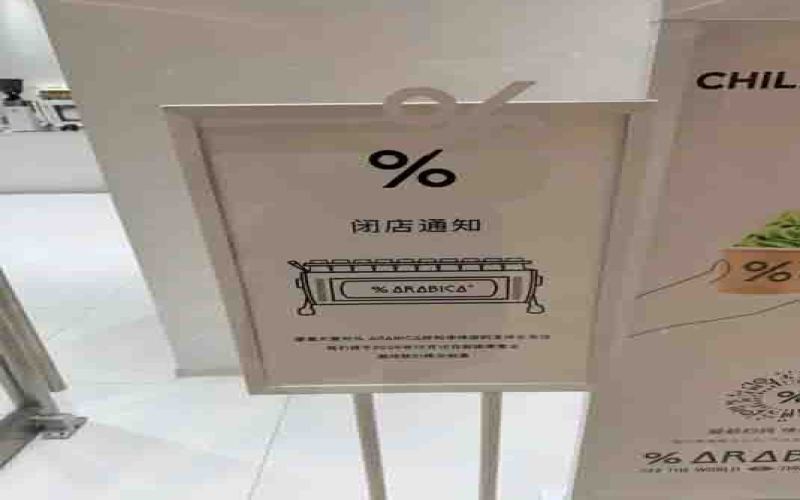
%Arabica's first Hohhot store closed less than six months after opening, sparking heated discussion about the pop-up store model and the value proposition of specialty coffee.
Recently, multiple netizens in Inner Mongolia posted that the %Arabica city first store located in Hohhot MIXC will officially cease operations starting December 16. This store only opened in early July this year simultaneously with the shopping mall, making it the brand's first store in Hohhot, and it was marked as a pop-up store on the official mini-program. It was originally planned to operate for about three months, and after the lease expired, it was renewed to continue operating until a closure notice recently appeared at the entrance. Regular customers felt caught off guard after receiving closure notification text messages and rushed to the store to check in and stock up on coffee beans. Nearby residents believe that %Arabica focuses on specialty coffee, and its pricing of over 40 yuan is not cost-effective; combined with the mall's fading popularity and reduced foot traffic, the pop-up store's business performance was average, so it is not surprising that it delayed until now before withdrawing. Since the beginning of this year, %Arabica stores in Nanning, Guangzhou, Wuxi, and other places have also closed one after another, continuing operations in the form of Kiosk coffee trucks. Some netizens speculate that after the closure of the Hohhot first store, the brand may return in a new form. [more…]
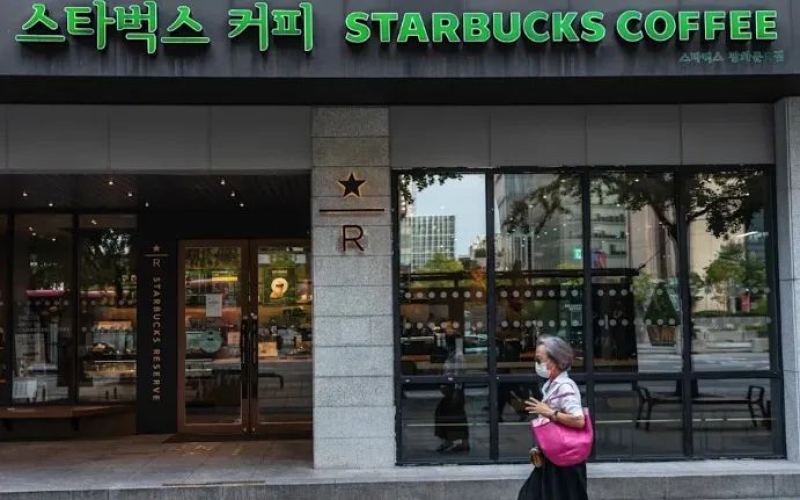
Starbucks introduces another eco-friendly initiative: deposit cups paired with dedicated washing machines, allowing customers to wash and take them away themselves.
Starbucks has been exploring ways to reduce single-use cup usage in recent years, from deposit cups in the South Korean market to cup borrowing programs in Europe and the US, but none have achieved the expected results. Now Starbucks has launched Plan C—introducing dedicated cup-washing machines in stores, where customers can wash their cups themselves after finishing their coffee and take them away, though a deposit is still required. The program will first be tested at Arizona State University and select stores in Hawaii. Meanwhile, Starbucks mainland China has fully switched to paper straws and sippy lids, reducing approximately 200 tons of plastic annually. Whether the environmental path can meet its 2025 targets remains to be seen. [more…]
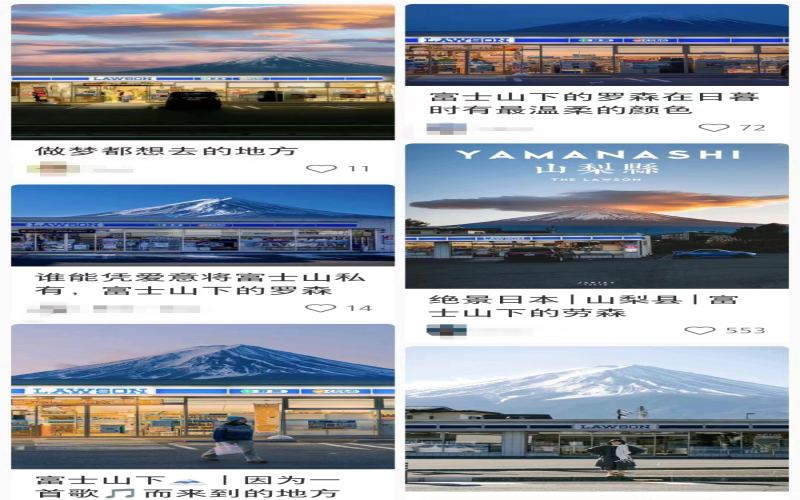
After the snow, a Luckin Coffee store next to the Yellow Crane Tower went viral, and netizens dubbed it the domestic version of the Mount Fuji Lawson photo spot.
Eason Chan's "Under Mount Fuji" turned the Lawson convenience store at the foot of Mount Fuji in Japan into a must-visit spot for countless tourists. Recently, after a heavy snowstorm, a Luckin Coffee store next to the Yellow Crane Tower in Wuhan unexpectedly went viral, dubbed by netizens as the "domestic version of Lawson under Mount Fuji." The blue signage contrasting with the snow-covered Yellow Crane Tower bears a striking resemblance in composition to the Lawson by Mount Fuji, sparking heated discussion on social media. Some praised Luckin for its precise location choice, while others joked that the ice cream cones and fences in front of the store look like a security booth. Behind this snowscape check-in craze, should Luckin really settle up on the promotional fees? Let's take a look at the brilliant comments from netizens. [more…]
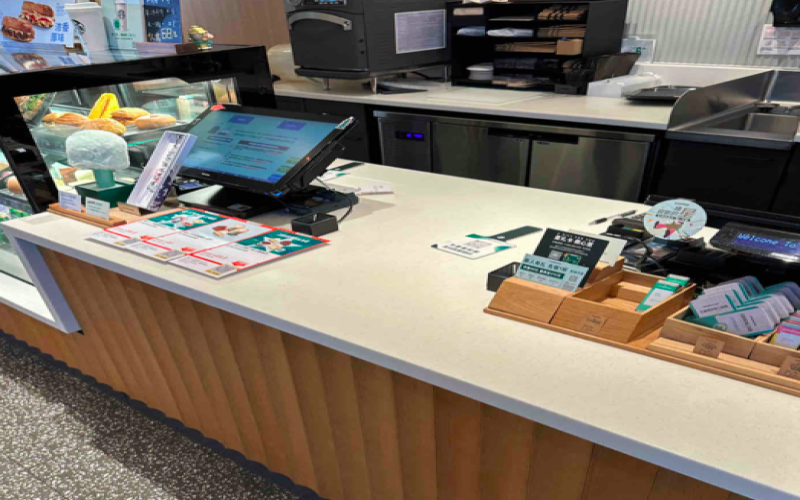
Starbucks Turning Employee Order Screens Toward Customers Sparks Debate, Internal Sales Pitch Accidentally Exposed
Recently, some Starbucks locations have turned their employee-only order-taking devices toward customers, attempting to let customers order self-service or have staff step out from behind the counter to assist with ordering. However, this move has sparked quite a bit of awkwardness and controversy: customers are at a loss facing the complex ordering system, internal sales scripts have been accidentally leaked, and staff are run off their feet even more during peak hours. Some baristas say the new rules not only fail to improve efficiency, but actually make the work more burdensome. This article will walk you through the ins and outs of this incident, as well as the real thoughts of Starbucks workers. [more…]
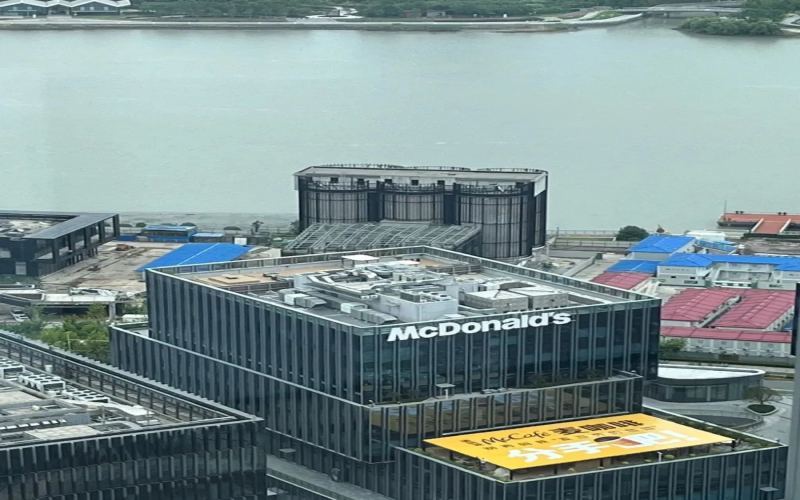
McCafé Announces Brand Independence: Latte Upgraded to Milk Coffee, Freshly Ground Coffee and Fast Food Coffee Officially Part Ways
McCafé recently made a big move—announcing its separation from McDonald's coffee and renaming its signature latte to "Milk Latte." This move sparked quite a bit of discussion: What exactly is the difference between McCafé and McDonald's coffee? And what is this new "Milk Latte" thing? It turns out McCafé has always operated as a store-within-a-store, focusing on freshly ground coffee, while the McDonald's fast-food area sells pre-ground drip coffee. After going independent, McCafé launched four Milk Latte products, with an increased amount of coffee grounds and a 30% higher milk ratio, resulting in a richer taste. Currently, there are nearly 2,500 McCafé stores nationwide, with plans to accelerate expansion in the future. Want to know the story behind this "breakup"? Read on. [more…]
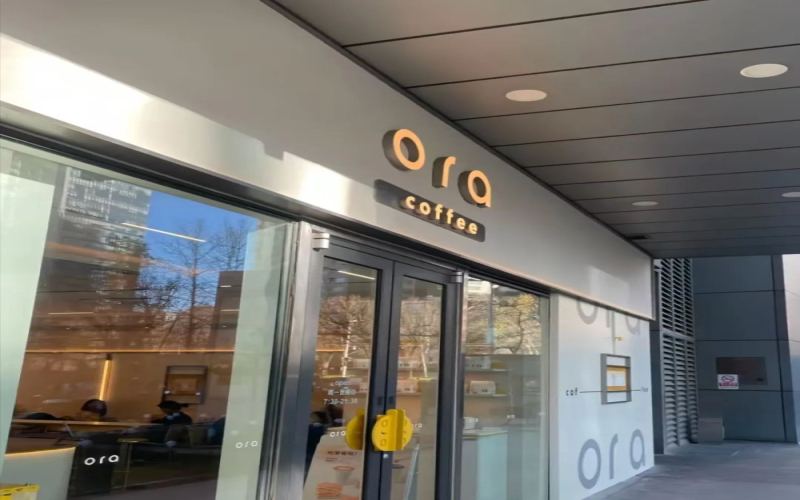
Peet's Coffee quietly enters the affordable segment, with Ora Coffee testing the mass market with a 9.9-yuan Americano.
Recently, a new coffee shop named ora coffee has appeared on the first floor of Beijing Fortune Shopping Center, and its certified entity behind it is Pi's Coffee (Shanghai) Co., Ltd., namely the Chinese entity of Peet's Coffee. This means that Peet's Coffee, which has always positioned itself in the mid-to-high-end segment, is officially testing the waters in the affordable coffee track. The overall design of ora coffee is minimalist, with a compact store space and not many seats, focusing on takeaway scenarios. The mini-program shows that its drinks use Peet's full range of coffee beans, yet the prices are nearly half cheaper than Peet's stores, and on weekdays an Americano can be purchased for 9.9 yuan. The store is equipped with two fully automatic coffee machines rather than the semi-automatic models commonly seen at Peet's, sparking heated discussion among coffee enthusiasts. Some are optimistic that Peet's can use this to seize the mid-to-low-end market, while others believe ora's positioning is awkward, as it struggles to compete upward with Manner and has little price difference downward compared with Luckin. The first Beijing store has already opened, and the Xi'an MixC World store is also in preparation. [more…]
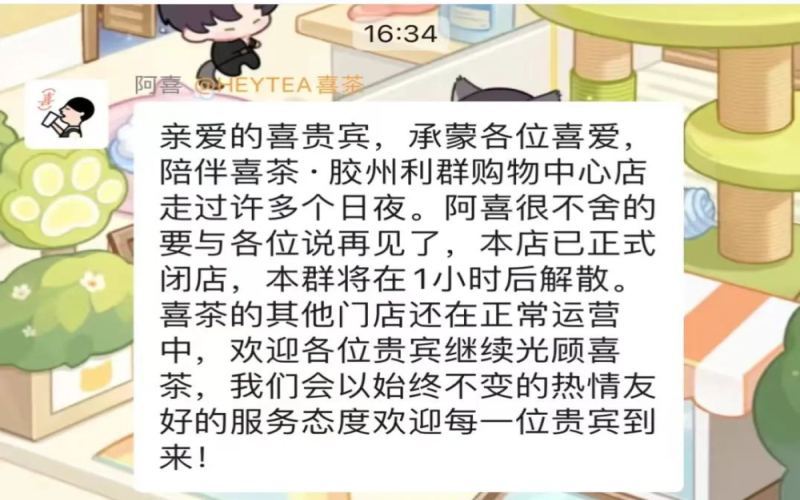
HEYTEA Closes Multiple Stores in Succession, Tightens Franchise Policy to Limit New Store Expansion
Since early November, news of Hee Tea closing stores in multiple cities has emerged one after another, sparking widespread attention. Some netizens reported that stores they frequented suddenly ceased operations—not for renovation and upgrades, but for permanent closure. According to statistics, stores closed in November include the Ganzhou Market store in Zhangye, Gansu; the Lanzhou Guofang Department Store store; and the Zhejiang University Zijingang Campus store, among other locations. Among them were both established stores that had operated for a decade and new stores that had been open for less than six months. This phenomenon is believed to be related to an internal letter Hee Tea released in September, which stated that the company would no longer pursue short-term store-opening speed and would instead focus on store quality and operational excellence. At the same time, a blogger claiming to be a city partner revealed that Hee Tea's franchise policy is being adjusted, with applications becoming more difficult, store-building costs increasing, and even a trend of "restricting new store openings and encouraging closures." [more…]
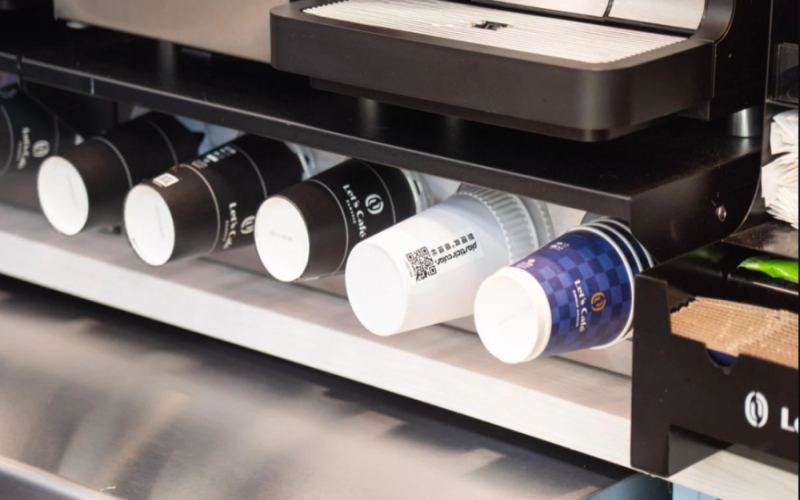
The Rise of Reusable Cup Waves: How Chain Brands from Starbucks to FamilyMart Are Driving New Coffee Plastic Reduction Practices
The normalization of coffee consumption and the prevalence of takeout culture have made disposable cups a pollution source that cannot be ignored. Environmental issues have long ceased to be a novelty in the coffee world—packaging innovation, coffee grounds reuse, paper straw replacements, as well as bring-your-own-cup discounts and in-store reusable cup pilots, are all being continuously explored. Recently, FamilyMart announced that it will massively roll out reusable cups to 400 stores in the Taiwan region, becoming East Asia's first convenience store chain to introduce reusable cups at scale. Previously, Starbucks launched a "borrowed cup" pilot in Seattle, and McDonald's also partnered with the Loop platform to test reusable cups. Can these initiatives truly change consumption habits and drive the industry to reduce plastic? This article will walk you through the practical paths of these pioneers and the real challenges they face. [more…]
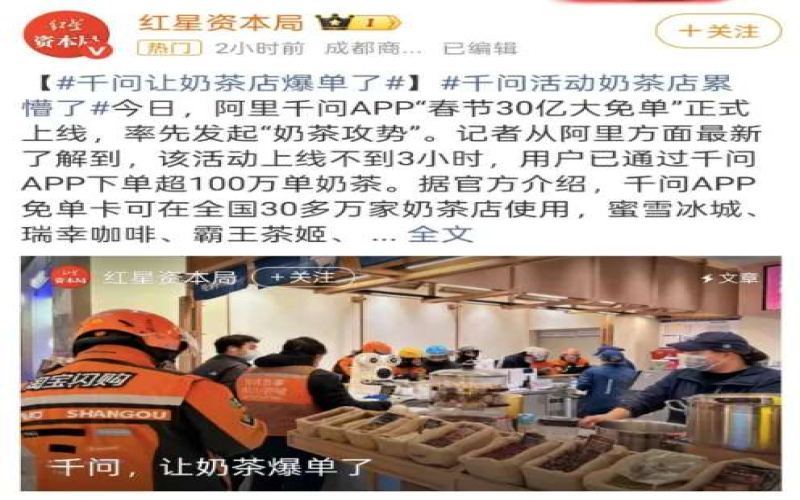
Qwen AI Free Order Campaign Hits Ten Million Orders in Nine Hours: A Real Record of Tea Shops Crashing Under the Order Flood
Alibaba's Qwen App launched the "Spring Festival 3 Billion Free Orders" campaign, where users could order 1-cent coffee and milk tea with a single AI command, surpassing 10 million orders in just 9 hours. Chain brands like Luckin Coffee, Chagee, and Jasmine Naibai were instantly overwhelmed by a flood of orders—store printers kept spitting out tickets, employees were urgently called back, and online channels were forced to shut down. Consumers waited hours only to receive random drinks, while delivery riders "grabbed orders" in the chaos. This AI-driven freebie frenzy made tea shop workers exclaim it felt like "reliving last year's delivery wars," with systems crashing, trending topics dominating social media, and officials urgently expanding capacity and extending the validity of free-order cards. [more…]
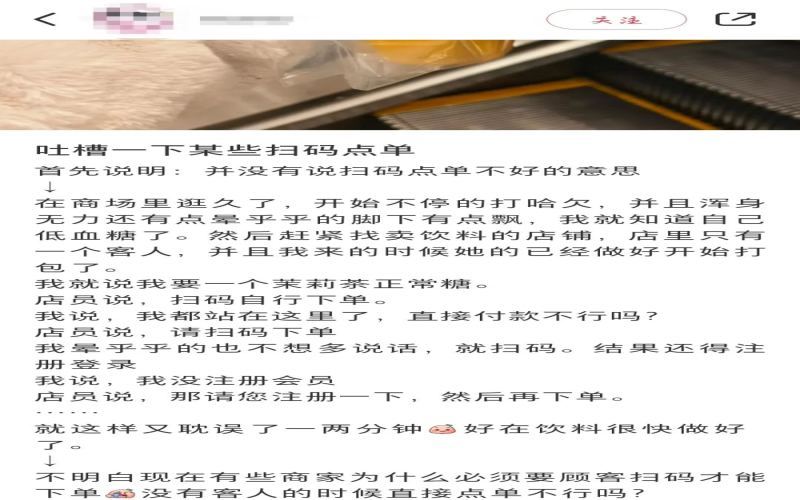
Has QR Code Ordering Become the Standard for Tea Shops? Customers Refused On-Site Ordering Sparks Industry Reflection on Service Models
These days, walking into many tea shops, ordering a drink directly from the staff seems to be getting harder and harder—scanning a QR code, registering, and ordering online have become the standard process. Recently, a netizen shared an experience of being refused when trying to order directly at the counter because they were feeling unwell, sparking widespread discussion. Some people agree that ordering by scanning the code is efficient and saves time, while others question why on-site ordering is still not allowed when there are no other customers. Tea shop employees revealed that factors such as not being equipped with a cash register system, difficulty making change for cash, and insufficient staffing make QR code ordering a helpless choice for most stores. This debate over ordering methods reflects the difficult balance between efficiency and humanized service. [more…]

Luckin Coffee's in-store proxy ordering prices spark controversy, with mini-program login process questioned for excessive collection of user information
Recently, Luckin Coffee has once again become the focus of heated discussion. An investigative reporter's on-site tests revealed that some stores do not offer direct offline ordering service; customers can only place orders by scanning a QR code via the mini-program or app, and when staff place orders on their behalf, payment must be made at the original price, which differs by several yuan from the discounted price after using coupons online. Meanwhile, the reporter also noticed that Luckin's mini-program requires users to provide their phone number and other information during the login process, and its privacy policy mentions the possible collection of browsing history, app installation lists, and other content, raising doubts about excessive information collection. In response, Luckin customer service explained that the discount calculation in the ordering system is complex, and staff-assisted orders may result in price discrepancies, while many consumers expressed understanding, believing that ordering on-site means giving up online discounts. This article will provide a detailed review of the incident and the views of all parties involved. [more…]
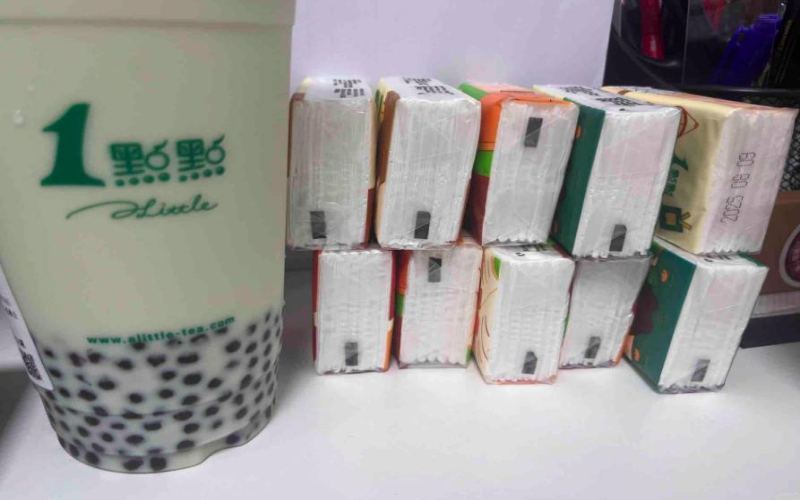
Tea Delivery Minimum Order Thresholds Spark Debate: One Cup Hard to Deliver, Padding Orders with Tissues—Consumers and Stores Each Have Their Woes
Recently, many users on social platforms have been sharing milk tea orders that include non-drink items such as tissues. This is not a brand promotion, but rather the result of consumers being forced to add extra items to meet the minimum order threshold for delivery. Many chain tea and coffee shops set their delivery minimum at 20 to 30 yuan, while a single cup of drink often costs only around ten yuan, leaving customers who just want one cup unable to place an order directly. They can only add tissues, snacks, or upgrade to a larger size to reach the required amount. Some orders also require a minimum actual payment to qualify for free delivery, further adding to the consumer's burden. Store operators say the minimum order fee and delivery rules are set uniformly by brand headquarters and the platform, and franchisees have no authority to adjust them. This discussion surrounding delivery thresholds reflects the real conflict between the demand for single-person, single-cup consumption and platform operating rules. [more…]
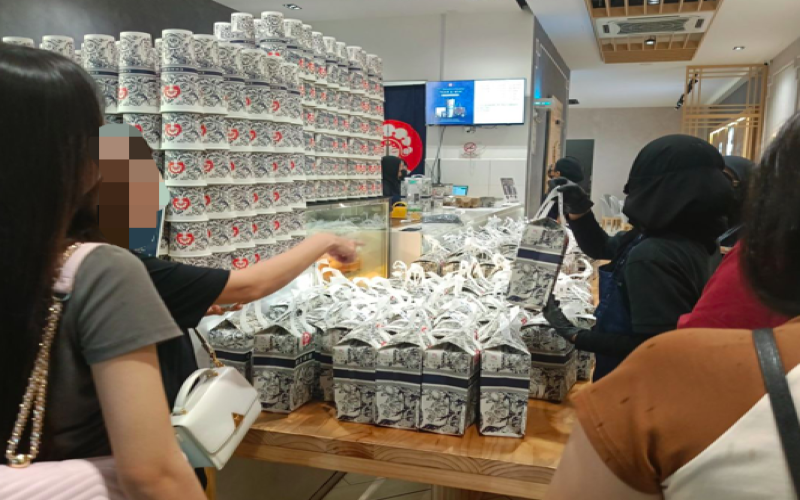
Chagee's 7th anniversary cup-tearing event triggers order surge at stores, with system and order pickup processes drawing complaints from consumers
Bawang Chaji celebrates its seventh anniversary. All stores in Malaysia launched a tear-the-cup lucky draw campaign on the 16th and 17th, with prizes including discount vouchers, branded backpacks, electronic products, perfumes, and lipsticks, attracting a large number of consumers to place orders enthusiastically. However, after the campaign began, order volumes surged at many stores, with some stores having more than a thousand or even over three thousand drinks awaiting preparation, leading to a series of problems such as excessively long waits to pick up orders, the ordering system being unable to cancel orders, and declining product quality. Consumers expressed dissatisfaction one after another, believing that the brand should have anticipated the campaign's popularity in advance and adopted flow-control measures. This article reviews the course of the incident and feedback from all parties, for the reference of coffee and tea beverage enthusiasts. [more…]
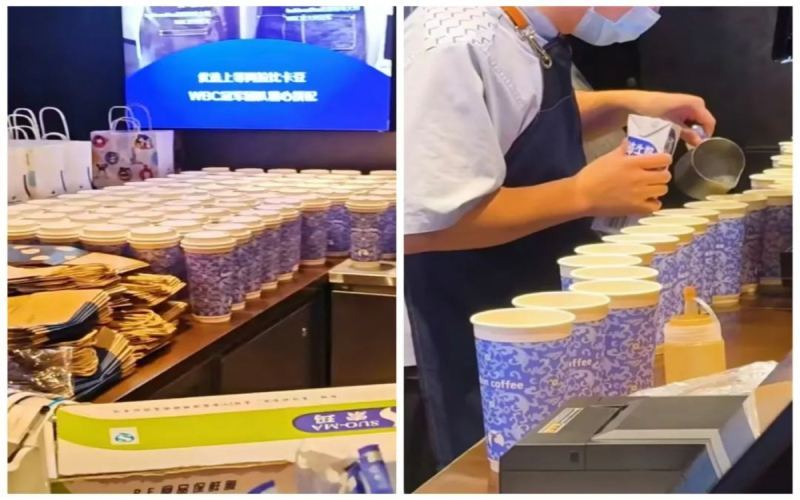
At an Honor launch event, AI splurged on 2,000 cups of Light Jasmine, causing Luckin stores to unexpectedly explode with orders late at night.
A smartphone launch event unexpectedly caused a sudden surge of group orders at nearby Luckin Coffee stores in the evening, catching staff off guard and keeping delivery riders constantly on the move. It turned out that the Honor CEO demonstrated an AI ordering feature on stage, buying 2,000 cups of Light Jasmine from Luckin with a single sentence. Because of the limit on the number of items per order, the AI spread the demand across multiple stores, causing Luckin outlets near the convention center to be flooded with orders at once. This move showcased Honor's intelligent AI interaction and also, unintentionally, gave Luckin a round of publicity for its efficient order fulfillment. [more…]
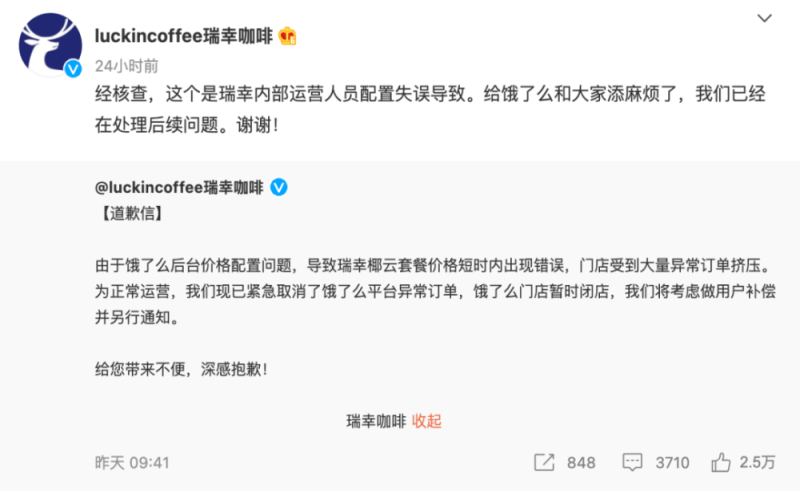
Is Luckin's forced cancellation of low-priced orders illegal? Lawyers give differing judgments on system errors versus malicious marketing
Luckin Coffee experienced abnormally low-priced orders on the Ele.me platform due to an operational configuration error. After a large number of users rushed to place orders, Luckin handled the situation by unilaterally canceling orders and temporarily suspending online operations. This move sparked strong dissatisfaction among consumers and also drew attention from the legal community: lawyers on one side argued that canceling paid orders was suspected of infringing on consumer rights; the other side pointed out that if it was a major misunderstanding, the contract could be revoked in accordance with the law. If there was intentional malicious marketing, it could also constitute fraud. In the end, Luckin promised to bear all losses and issue compensatory vouchers. This article sorts out the course of the incident, netizen feedback, and lawyers' views, so that coffee lovers can understand the full picture of this controversy. [more…]
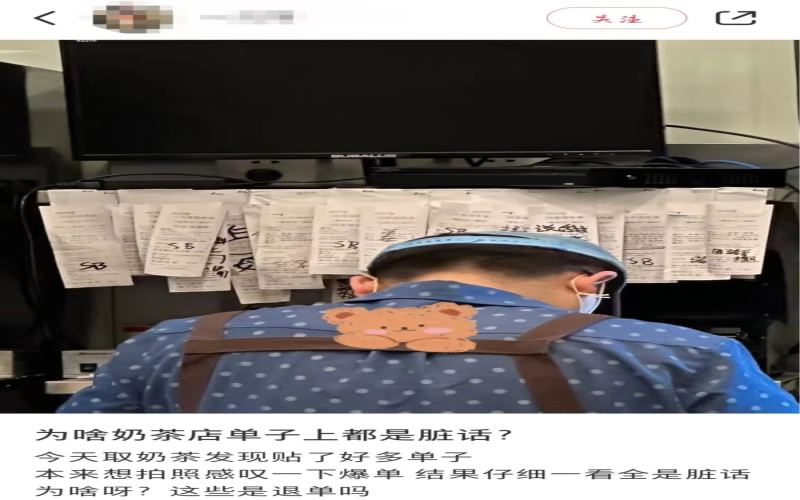
Mysterious abbreviations on milk tea orders spark debate, insiders say they're a helpless outlet for emotions
Recently, a photo of a milk tea shop order receipt sparked widespread discussion on social media. In the photo, the receipt clip above the employee's head is stuffed with orders, with words like "SB" and "said sweet" written in black marker, leading the photographer to mistakenly think they were all curse words. Subsequently, netizens and milk tea industry workers offered interpretations, suggesting these abbreviations were more likely markers for order notes or emotional venting by employees. The incident reflects the real situation of food service workers under the pressure of order surges and understaffing, and also triggered discussions about mutual understanding between customers and employees. [more…]